







Search Results for: espresso base

A Comprehensive Guide to Espresso Coffee Varieties: Flavor Differences and Ratios from Espresso to Cappuccino and Latte
Walk into any café, and espresso is almost always the star of the menu. Many people's first reaction when tasting espresso is that it's bitter and intense, but in reality the espresso family is far more than just this one flavor. To find the cup that suits your taste—neither bitter nor astringent—you first need to understand what the common types of espresso drinks actually are. In this article, Front Street Coffee (FrontStreet Coffee) sorts out the most common espresso drinks found in cafés, from the extraction parameters of espresso and the blending logic of coffee beans, to the ingredient ratios and preparation details of Americano, latte, cappuccino, mocha, macchiato, caramel macchiato, and Dirty coffee, explaining one by one their differences and connections, to help coffee lovers understand the espresso system more systematically and find the cup that belongs to them. [more…]

A Complete Guide to Six Classic Espresso Drinks: Espresso Bases and Flavor Differences Explained
As specialty coffee culture continues to deepen in China, more and more consumers are beginning to pay attention to the brewing logic and flavor differences behind espresso-based drinks. As the core foundation of the entire system, espresso gives rise to a variety of classic categories—such as Americano, latte, flat white, cappuccino, and mocha—through adjustments to extraction parameters and the pairing of different ingredients. This article will break down the definitions, origins, and flavor characteristics of the six major espresso drinks one by one, and combine them with the actual serving parameters used at Front Street Coffee locations to help coffee enthusiasts understand the composition and tasting points of each cup in a more systematic way. [more…]

Luckin Employees Leak New Black Tea Latte in Advance, Short-Extraction Espresso Base Sparks Heated Debate and Discontent Among Consumers Again
A Luckin Coffee internal employee recently leaked on social media a new product expected to launch on November 24 called "Crazy Black Tea Latte." A video showing its preparation reveals that the drink still uses a short-extraction espresso as its coffee base, and the news quickly sparked heated discussion online. Many consumers expressed strong dissatisfaction with the short-extraction espresso, arguing that its coffee liquid volume is only about 20 milliliters and that once tea or fruit is added, the coffee flavor is severely masked, leaving the taste as bland as water. Although some customers tried to request a switch to Italian-style ristretto via order notes, they were often refused by stores. The controversy surrounding Luckin Coffee's choice of coffee base continues to intensify. [more…]

How to Choose Espresso Beans? From Espresso Base to Four Front Street Coffee Blend Recommendations
To make a delicious espresso at home, choosing the right beans is the first step. This article starts with the fundamental role of espresso, explaining how it determines the final flavor of drinks such as Americano, latte, and cappuccino, and offers guidance on selecting blended beans for home use in terms of cost-effectiveness, consistency, and flavor compatibility. It then introduces four Front Street Coffee espresso blends one by one: Classic Blend, Strawberry Candy Blend, Specialty Blend, and Commercial Blend, explaining their origin combinations, roast levels, flavor profiles, and suitable scenarios, helping coffee lovers find the right espresso beans based on taste preferences and budget. [more…]

The Soulful Base of Australian White Coffee: Ristretto Espresso Extraction Principles and Italian Bean Selection
The reason why the Flat White stands out among the many milk coffees lies in its unique base—Ristretto. What exactly is the difference between this extraction method, known as "extra-concentrated espresso" or "refined espresso," and regular Espresso? The preparation methods circulating online are all over the place, and beginners often find it hard to grasp the core essentials. This article, from the perspective of Front Street Coffee, will systematically sort out the definition of Ristretto, its essential connection to Espresso, and the operating logic, pros, and cons of the two mainstream extraction paths. At the same time, for readers who want to make Italian-style extra-concentrated espresso at home, it will also share the flavor characteristics and suitable scenarios of Front Street's specialty blend and classic blend, helping you understand this niche yet fascinating espresso comprehensively, from beans to extraction. [more…]

The Exclusive Espresso Base for Flat White: Definition, Extraction Principles, and a Detailed Guide to Two Brewing Methods
The reason why a flat white differs from a latte and a cappuccino lies not only in its delicate, thin microfoam, but more crucially in its base—Ristretto. However, opinions on the web about how to make a Ristretto vary widely, leaving many newcomers baffled. This article, from the perspective of Front Street, systematically sorts out what exactly a Ristretto is, its relationship with Espresso, and the two mainstream approaches to making it: one is to directly limit the yield and extract only the front and middle segments; the other is to adjust the grind finer and control the flow rate to build up concentration. The article will also analyze the pros and cons of each method, and why most coffee shops ultimately choose the former. [more…]

The Complete Guide to Making All Types of Espresso Drinks: Detailed Recipes and Ratios from Espresso Base to Specialty Flavored Beverages
Espresso-based coffee is a must-have category in every café, ranging from espresso bases to various milk coffees, black coffees, and even creative specialty drinks, with a wide variety of styles. Front Street's stores offer classic beverages such as Americano, Latte, Cappuccino, and Flat White. This article will systematically outline the most common espresso coffee styles found in coffee shops, including the extraction ratio differences among the trio of Espresso, Ristretto, and Lungo, the unique method of making Doppio, the water volume comparison between Americano and Long Black, the recipe characteristics of the milk coffee family such as Latte, Cappuccino, Macchiato, Flat White, and Piccolo, as well as the preparation methods of Italian specialties like Mocha, Marocchino, Affogato, Con Panna, Caffè Corretto, and Shakerato, helping coffee beginners quickly build a framework of understanding. [more…]
What is the core difference between Americano and Latte? A Complete Breakdown from the Espresso Base to Front Street Coffee's Blend Beans
The difference between Americano and Latte ultimately comes back to the shared base of Espresso. An Americano is espresso diluted with water, while a Latte is espresso blended with milk — the two head in completely different flavor directions. From the perspective of Front Street Coffee, this article first breaks down the extraction logic and tasting approach of Espresso, then explains the key points of making a Latte and milk steaming techniques, and finally systematically introduces the recipe concepts and flavor profiles of Front Street Coffee's four espresso blends — Black Cocoa Blend, Specialty Blend, Commercial Blend, and Warm Sun Blend — helping coffee lovers understand the complete chain of a delicious cup of espresso from beans to cup. [more…]
Starbucks Coffee Full Analysis: From Espresso Base to Cold Brew, A Detailed Guide to the Taste and Preparation of Classic Drinks Like Americano and Latte
Starbucks coffee is where many people first encounter specialty coffee in their daily lives, but do you really understand the product logic behind it? This time, Front Street Coffee takes you through a systematic overview of Starbucks coffee types and their flavor characteristics. Most Starbucks products are based on espresso, and by combining it with different ingredients such as water, milk, milk foam, and syrup, they give rise to classics like the Americano, Latte, Cappuccino, Flat White, Mocha, and Caramel Macchiato. In addition, the cold brew coffee that has become hugely popular in the past two years is also worth paying attention to. This article will introduce the recipe composition and taste differences of these coffees one by one, and include the specific brewing parameters for Front Street Iced Americano, to help you find the cup that best suits your taste. [more…]
How to Choose Beans for Making Espresso at Home? Understanding Espresso Bean Blends and the Story of Starbucks Espresso
Espresso means "fast" in the Italian context. It uses steam pressure to extract coffee liquid in a short time, which not only preserves the coffee crema for a longer period but also balances acidity and bitterness, so it is often called a work of art among coffees. It is also the common base for drinks such as lattes, cappuccinos, macchiatos, and mochas. To brew espresso at home, the key lies in the choice of espresso beans—they are usually blended from multiple beans such as Kenyan, Mandheling, Mocha, Brazilian, and Colombian, with different origins and roast levels combining to create their own unique taste and aroma. This article sorts out the approach to selecting espresso beans, reviews the flavor characteristics of five commonly used base beans one by one, and provides standards for judging a good cup of espresso, for coffee lovers' reference. [more…]

The Differences Between a Latte and a Flat White Explained: Espresso Base, Cup Size, and Milk Foam Thickness Fully Analyzed
Latte and Flat White are the two most common milk coffees on coffee menus, but they differ noticeably in preparation method and flavor presentation. This article compares them from three dimensions: espresso base, cup size, and milk foam thickness: Flat White often uses a ristretto extraction, giving it a stronger coffee taste without bitterness; Latte has a higher proportion of milk, making it sweeter and easier to drink; while Flat White's milk foam is extremely thin, allowing people to directly feel the fusion of coffee and milk. In addition, the article also points out that Flat White is only made as a hot drink, and iced Flat White does not exist. Whether you prefer a rich, creamy sweetness or pursue the true taste of coffee, you can find an option that suits you. [more…]
What's the difference between a latte and an Americano? Understanding the espresso-based coffee system and its taste characteristics starting from espresso
On an espresso menu, latte and americano are the two most common options, but many people are not clear about their fundamental differences. In fact, both drinks are extensions of espresso: a latte adds milk to the espresso, while an americano dilutes the espresso with water. Understanding this underlying logic makes it clear why the two present completely different profiles in taste, aroma, and aftertaste. Starting from Front Street Coffee's production practices, this article will first introduce the definition of espresso, bean selection, and extraction parameters, then separately analyze the preparation methods and flavor performance of latte and americano, and finally explain the source of americano's bitterness and adjustment approaches, helping coffee enthusiasts build a clear cognitive framework for espresso. [more…]
Espresso Coffee Fully Explained: A Detailed Guide to the Recipe Ratios and Methods of the Espresso Base, Black Coffee, and Milk Coffee Families
The world of Italian coffee is far richer than a single cup of Espresso. From the three variations of the espresso base—Espresso, Ristretto, and Lungo—to the Americano and Long Black in the black coffee camp, and then to the milk coffee family of Latte, Cappuccino, Macchiato, Flat White, and Piccolo, each one has its own unique logic of proportions and flavor orientation. In addition, there are Italian specialty drinks such as Mocha, Marocchino, Affogato, and Con Panna, as well as the recently popular Dirty and European-style iced shaken coffee. This article will systematically sort out the preparation recipes and proportional relationships of these fancy coffees, helping coffee lovers understand the differences and connections between them, so that whether ordering in daily life or making them by hand, they can have a clear understanding. [more…]
A Complete Guide to the Espresso Family: Ratios, Flavors, and Key Production Points of Espresso Bases and Common Varieties
Italian coffee is far more than a cup of bitter espresso. Starting from Espresso as the core base, adding water, milk, milk foam, chocolate, or caramel gives rise to a rich variety of drinks such as Americano, Latte, Cappuccino, Mocha, Macchiato, Caramel Macchiato, and Dirty. Understanding the ingredient composition, classic ratios, and flavor characteristics of each Italian coffee is the key to finding one that suits your taste. This article takes espresso as its starting point, systematically sorting out the names, ingredient proportions, and preparation details of common Italian coffee varieties found in cafés, and shares Front Street Coffee's specific approach to each drink, helping coffee lovers gain a clearer understanding of the large family of Italian coffee. [more…]
A Complete Guide to All Types of Espresso Drinks: The Espresso Trio, Milk-Based Coffees, and Specialty Flavored Beverages
Walking into any café, the espresso menu is always so dazzlingly varied that it's hard to choose. What exactly is the difference between Espresso, Ristretto, and Lungo? Why do Americano and Long Black taste so different? What are the respective proportions and characteristics of a Latte, Cappuccino, Flat White, and Piccolo? This article starts with the three extraction methods of espresso, and goes through the complete family tree of black coffee, milk coffee, and espresso-based specialty coffee drinks one by one, helping you sort out the recipe logic and flavor characteristics of each drink, so you won't be confused the next time you order. [more…]

Comparing Americano, Long Black, and Lungo: Flavor Profiles of Espresso-Based Black Coffee and a Guide to Choosing Italian-Style Beans
Americano, Long Black, and Lungo all share espresso as their base, yet each has its own distinctive character due to differences in water volume, extraction method, and flavor orientation. Front Street Coffee systematically sorts out the differences among these three black coffees from the perspectives of historical origins, preparation order, coffee-to-water ratio, and extraction yield, and further analyzes the trade-off logic of espresso blend beans among price, stability, and flavor. The article also introduces the formulation concepts and suitable applications of Front Street's four espresso coffee beans, helping coffee enthusiasts choose the right everyday beans or beans for café use according to their own needs. [more…]

A Complete Guide to Common Espresso Drinks in Cafés: From Espresso Base to Milk Coffee and Specialty Drinks
Walk into any coffee shop, and espresso-based drinks are almost always the mainstay of the menu. Front Street Coffee locations offer classics like Americano, Latte, Cappuccino, and Flat White, and many shops also blend in various extras to create inventive drinks. This article systematically sorts out the most common types of espresso drinks found in coffee shops: first get to know the trio of espresso "brothers"—Espresso, Ristretto, and Lungo—along with Doppio; then learn about black coffees such as Americano and Long Black; next, take stock of milk coffee members like Latte, Cappuccino, Macchiato, Flat White, and Piccolo; and finally introduce espresso specialties such as Mocha, Marocchino, Affogato, Con Panna, Corretto, and shaken iced coffee. Beginners can use this to quickly build a complete framework of understanding for espresso drinks. [more…]
A Complete Guide to the Espresso Family: Flavor Secrets from the Espresso Trio to Fancy Specialty Drinks
Walking into any café, the dazzling array of espresso drinks on the menu can be overwhelming. But do you truly understand the extraction logic and flavor differences behind these coffees? This article starts with the three extraction methods of espresso and gradually breaks down the family tree of black coffee, milk coffee, and specialty espresso-based drinks. Whether you prefer a rich and full-bodied Ristretto, adore a cappuccino with dense milk foam, or want to try a cup of Dirty with distinct layers, this article will help you build a complete framework for understanding espresso coffee. At the same time, we will also recommend Front Street Coffee's classic blend, which is suitable for making traditional espresso-style flavors, so you can easily recreate café-quality drinks at home. [more…]
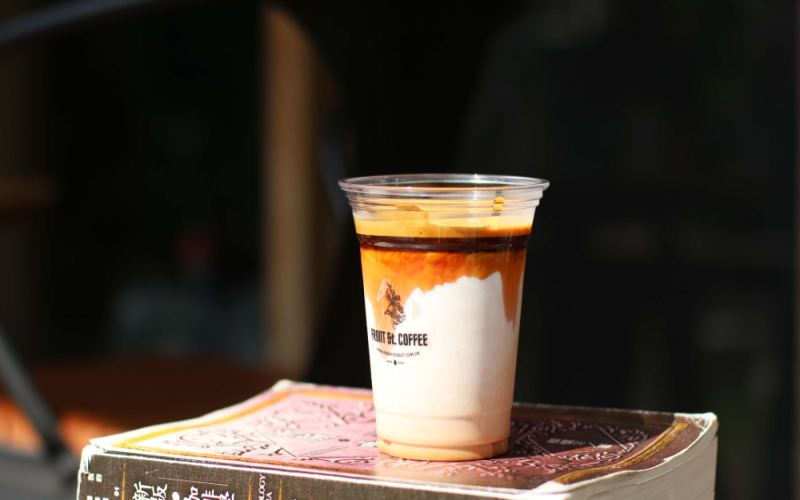
Espresso Beginner's Guide: From Flavor Characteristics to Extraction Parameters, Plus a Discussion of Mouthfeel Differences with Americano
Espresso is one of the most fundamental coffee categories in cafés worldwide, serving as the base for drinks such as Americanos, lattes, and cappuccinos. From the perspective of Front Street Coffee, this article introduces espresso's flavor characteristics, how it tastes, and the production directions best suited to blends versus single-origin beans (SOE). The article also provides initial reference parameters for espresso extraction and explains the differences in mouthfeel between Americano and espresso, helping coffee enthusiasts understand espresso more systematically and choose a suitable way to drink it based on their own preferences. [more…]

Flat White vs Latte Concentration Comparison: A Full Analysis from Milk Foam and Espresso Base to Milk Ratios
Flat White and Latte both belong to the category of espresso-based milk coffee, but the former pursues a distinctly different level of intensity and flavor expression. From the perspective of Front Street Coffee's production approach, this article systematically reviews the origins of Flat White, the key points for controlling milk foam thickness, the extraction method for a Ristretto espresso base, and the logic of milk ratio adjustment, while combining these with the actual in-store preparation process to gradually present the complete method for making a cup of Flat White. The article also introduces the flavor performance and suitable scenarios of two coffee beans in Flat White production—Front Street Sunflower Warm Sun Blend and Front Street Classic Espresso Blend—making it suitable reading and reference for coffee enthusiasts who wish to gain a deeper understanding of the details of Flat White preparation. [more…]